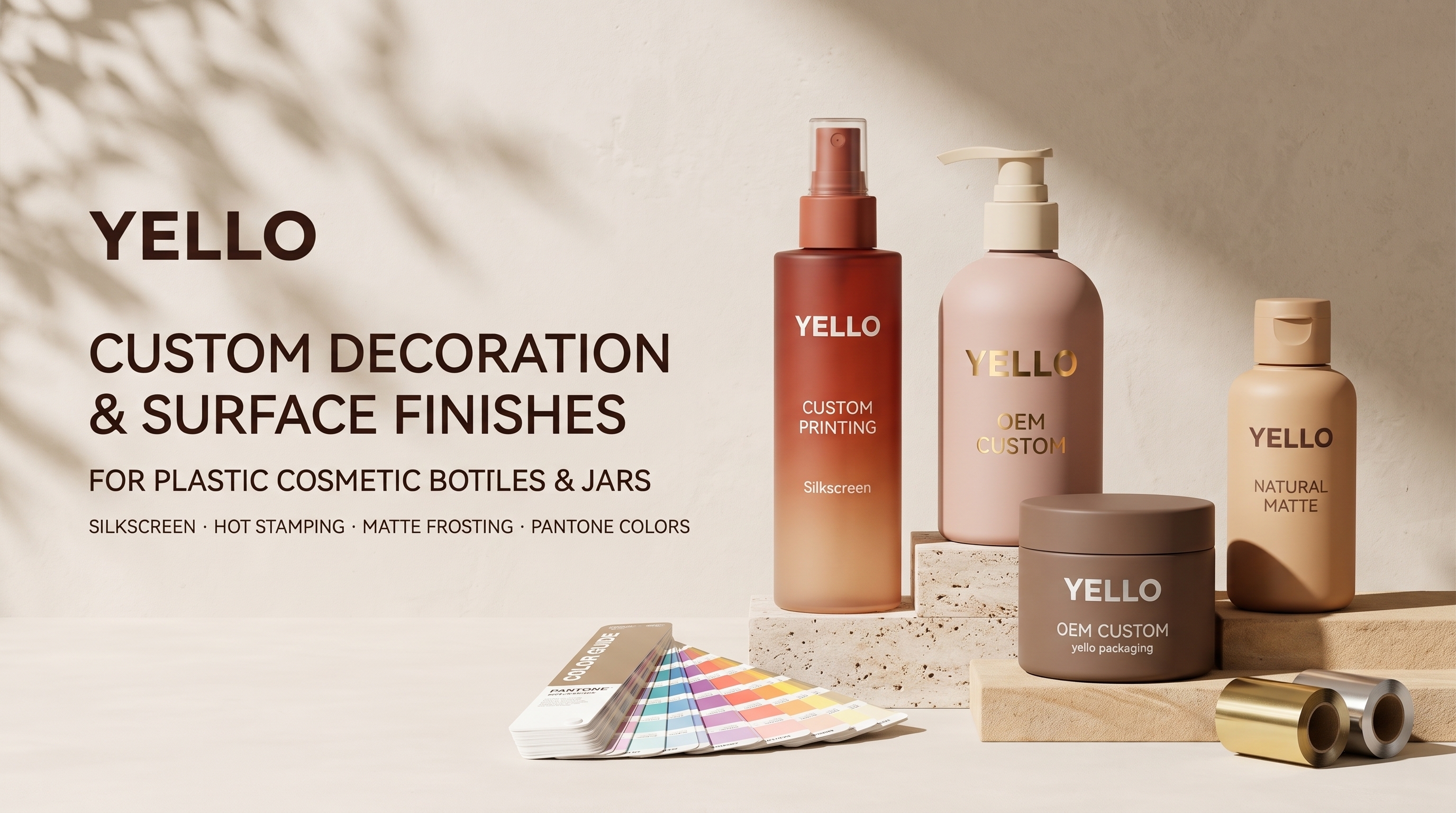
In a crowded skincare and personal care market, stock plastic containers alone rarely capture a consumer’s attention. Once you have selected the right resin—whether crystal-clear PET, durable HDPE, or rigid PP—surface finishing and logo decoration are what transform an ordinary plastic bottle or jar into a recognizable retail brand.
However, decorating plastic packaging is technically very different from printing on paper or glass. Because plastics have varying surface energies, flexibility, and chemical compositions, choosing the wrong printing method can result in smudged logos, flaking foil, or peeling coatings inside humid bathrooms.
In this guide, we compare the most effective custom decoration and finishing techniques for plastic cosmetic bottles and jars, along with practical factory tips to help you prepare your artwork for mass production.
| Technique | Compatible Plastics | Visual & Tactile Effect | Durability | Best-Fit Applications |
|---|---|---|---|---|
| Silkscreen Printing | PET, HDPE, PP, PETG | Crisp, slightly raised opaque ink with vibrant color density | High (water & oil resistant) | Minimalist brand logos, ingredient lists, usage instructions |
| Hot Foil Stamping | PET, PP, HDPE (flat/cylindrical) | Metallic mirror sheen (gold, silver, rose gold, holographic) | Medium-High (best with protective topcoat) | Luxury face cream jars, anti-aging serums, premium accents |
| Matte Frosting / Spray Coating | PET, PP, HDPE | Velvety soft-touch texture, diffused frosted translucency | High (anti-slip in wet hands) | Shower shampoo bottles, pastel skincare jars, toner bottles |
| Pantone Color Masterbatch | PET, HDPE, PP | Solid, uniform through-body color (glossy or natural matte) | Permanent (scratch-proof) | Signature brand colorways, UV-blocking amber/opaque bottles |
Silkscreen printing transfers UV-cured ink directly onto the surface of plastic bottles and jars through a fine mesh stencil. Unlike paper or film stickers, screen-printed text never bubbles, wrinkles, or peels when exposed to water or shower steam.
If your brand wants a high-end cosmetic counter aesthetic while keeping the lightweight, shatter-proof advantages of plastic, hot stamping is the ideal choice. Heat and pressure bond metallic or pigmented foil permanently onto the plastic wall.
Consumers associate tactile matte textures with clean, modern skincare brands. On plastic containers, a matte finish can be achieved in two ways:
When matching your brand’s exact Pantone color, understanding how color is applied helps balance unit cost and performance:
Why do logos sometimes scratch off poorly manufactured plastic bottles? Because polyolefins like PP and HDPE naturally have low surface energy, causing printing ink to bead up rather than bond.
At a qualified cosmetic packaging factory, two mandatory steps prevent this failure:
To speed up pre-production sampling and avoid back-and-forth revisions, prepare your design files with these four specifications:
.AI, .EPS, or vector .PDF files with all fonts converted to outlines (curves). Raster images (JPG/PNG) cannot be used to make silkscreen plates or stamping dies.With over 20 years of specialized plastic packaging manufacturing in Guangzhou, YELLO Packaging provides full in-house decoration capabilities—including custom Pantone color matching, matte frosting, precision silkscreen printing, and hot foil stamping across our entire range of PET/HDPE bottles and PP cream jars.
Have a logo file ready to test?
Send your artwork and target bottle or jar dimensions to sales3@yellopackaging.com or reach out via our Contact Page for a free decoration consultation and sample quote.


