 A cosmetic bottle is only as reliable as the dispenser sitting on top of it. Even the most luxurious skincare or salon haircare formulation will lose repeat customers if the pump clogs, leaks in transit, or dispenses an inconsistent dose. For beauty brand owners, formulators, and packaging buyers, selecting the right pump dispenser or closure is essential for both user experience and supply chain safety.
In this comprehensive guide, we walk you through how to match pump mechanisms to your formula viscosity, decode industry neck finish standards (such as 20/410, 24/410, and 28/410), and customize dip tubes and surface finishes for your plastic bottles.
| Dispenser Type | Ideal Formula Viscosity | Standard Dosage Output | Best-Fit Cosmetic Products |
|---|---|---|---|
| Lotion Pump | Medium to High (Emulsions & Gels) | 1.5cc / 2.0cc / 4.0cc per stroke | Shampoos, conditioners, body washes, body lotions, hand soaps |
| Fine Mist Sprayer | Water-Thin Liquids (Low Viscosity) | 0.12cc – 0.18cc per spray | Facial toners, setting sprays, hair perfumes, body mists |
| Foam Pump | Watery Surfactant Liquids | 0.4cc / 0.8cc / 1.5cc foam output | Mousse facial cleansers, self-tanning foams, baby washes |
| Treatment / Serum Pump | Light-to-Medium Serums & Oils | 0.2cc – 0.5cc precision dose | Facial serums, cleansing oils, liquid foundations |
| Flip-Top & Disc Caps | Low to Medium-High (Squeezable) | Manual squeeze control | Travel-size toiletries, hair conditioners, sunscreens, toners |
For 250ml to 500ml PET and HDPE bottles used in bath and body care, lotion pumps are the industry standard. When sourcing lotion pumps for e-commerce or retail, pay close attention to the locking structure:
When packaging facial toners, hydrosols, or hair mists in sleek cylinder bottles, the nozzle orifice size determines the spray pattern. High-grade fine mist sprayers atomize liquid into a soft, cloud-like mist without leaving large water droplets on the skin. They are typically paired with a clear or color-matched PP overcap to prevent accidental actuation during shipping.
Foam pump dispensers mix liquid surfactant formulas with air through a dual-nylon mesh chamber, dispensing rich, creamy foam in a single press. They require wider neck openings (typically 40mm or 43mm) and work best with low-viscosity, particle-free liquids.
To ensure a leak-proof seal, the pump collar must match the bottle neck thread precisely. Cosmetic packaging uses a two-number standard:
A pump dispenser will fail if the PE dip tube is cut incorrectly. If the tube is too short, up to 15% of the lotion remains trapped at the bottom; if it is too long, the tube curls upward or blocks the intake valve. At the factory level, dip tubes are custom-trimmed with a flat cut or V-shaped angle cut reaching within 1mm to 2mm of the bottle base corner.
Pump collars can be customized with ribbed sides (for extra wet-hand grip in the shower), smooth matte or glossy finishes, or anodized aluminum shells in gold, silver, or matte black to match your brand aesthetic.
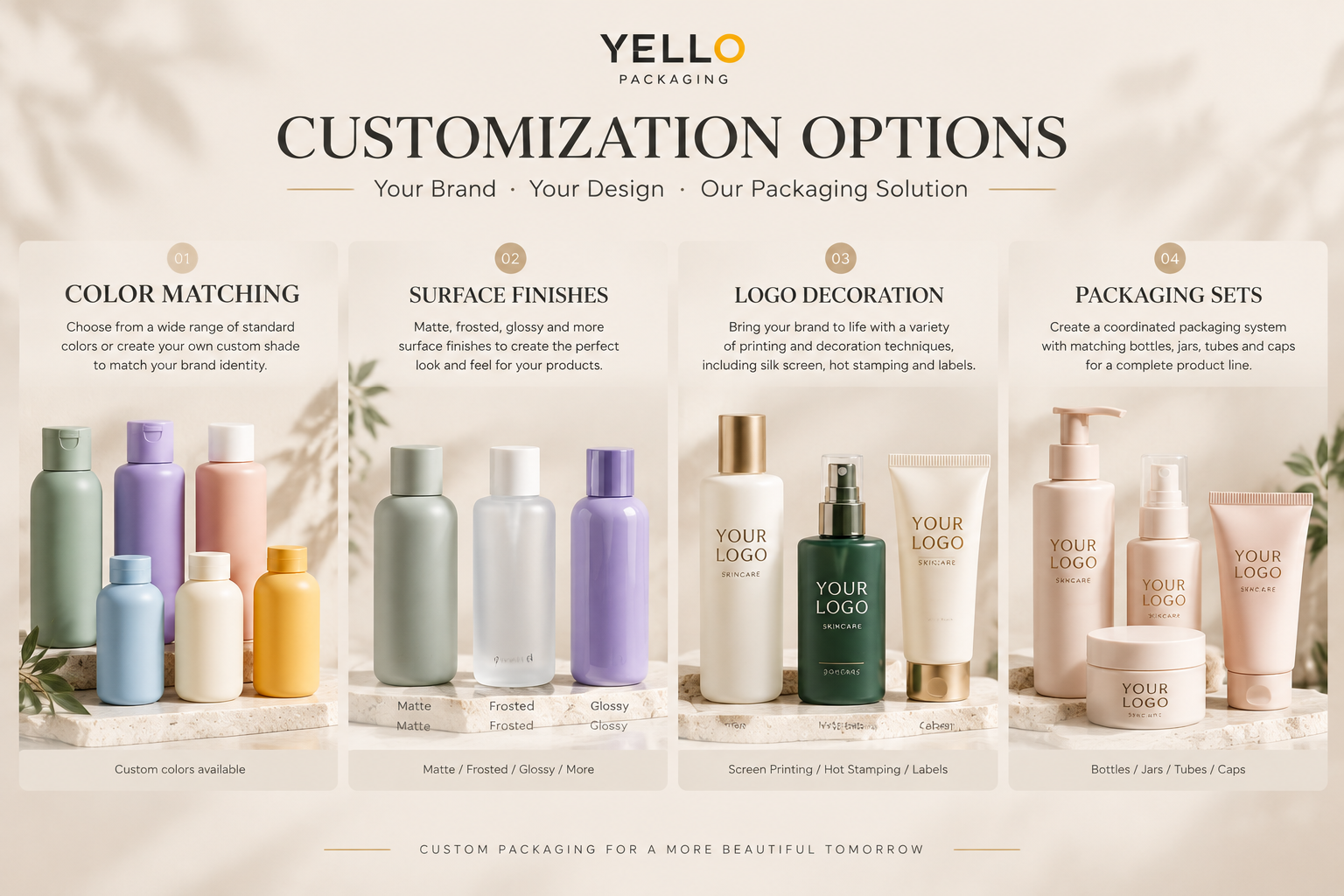
Sourcing bottles and pumps from separate vendors often leads to thread mismatches and leakage failures. At YELLO Packaging, we manufacture and vacuum-test complete bottle-and-pump assemblies—including PET and HDPE bottles paired with custom-colored lotion pumps, fine mist sprayers, foam pumps, and flip-top caps.
Need help matching a pump to your formula viscosity?
Contact our packaging engineers at sales3@yellopackaging.com or visit our Contact Us page to request free pre-trimmed sample kits today!


