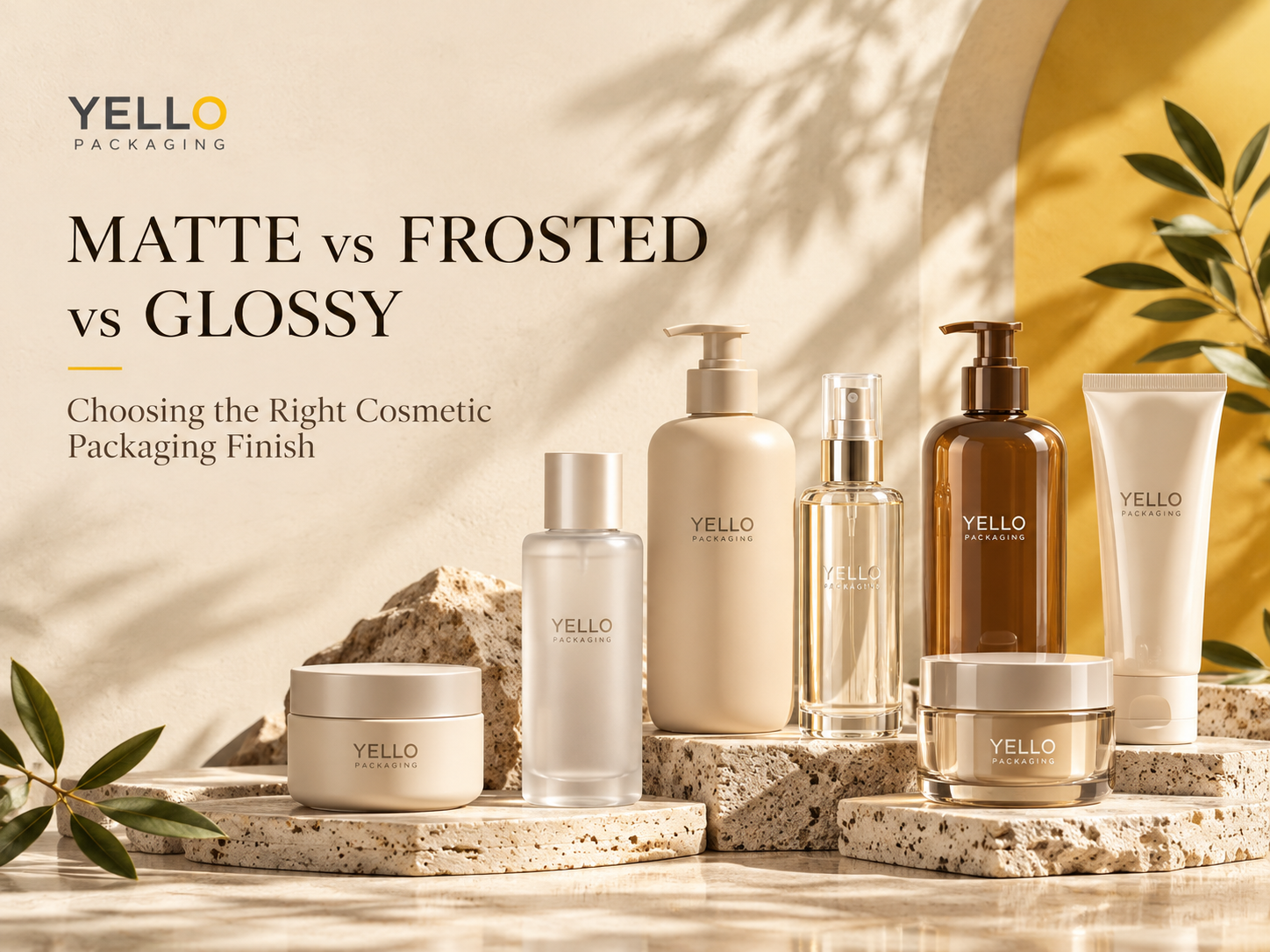
 When developing cosmetic packaging, choosing the right bottle shape and material is only part of the process. The surface finish also plays an important role in how customers perceive your product, how your logo appears, and how your packaging fits your brand identity.
For skincare, haircare, and personal care brands, matte, frosted, and glossy finishes are three popular directions to consider. Each creates a different visual effect and may require a different finishing process depending on the packaging material and design.
In this guide, YELLO Packaging explains the differences between these finishes and what brands should consider before ordering custom cosmetic bottles, jars, and tubes.
Matte cosmetic packaging has a low-reflection surface that creates a softer, more understated appearance.
It is often considered by brands that want a minimalist, contemporary, or premium visual identity.
Low reflection: Reduces strong surface glare under studio and retail lighting.
Subtle appearance: Works well with neutral colors, muted tones, and minimalist graphics.
Tactile design options: Some projects combine a matte appearance with a soft-touch coating, although these are not the same thing.
Versatile branding: Can be paired with contrasting logo colors, silk screen printing, or selected metallic decoration.
Matte finishes can be considered for lotion bottles, serum bottles, shampoo bottles, face cream jars, and cosmetic tubes.
For example, an ivory matte bottle with dark logo printing can create a clean skincare look, while a muted green bottle may suit a botanical-inspired personal care line.
However, matte does not automatically mean scratch-proof or fingerprint-proof. The durability and feel depend on the material, surface treatment, and coating system.
Best for: Brands seeking a restrained, modern, and coordinated packaging appearance.
Frosted cosmetic packaging creates a hazy, translucent appearance rather than the crisp transparency of a clear container.
It is particularly useful when a brand wants to show some of the product or the container's depth without creating a completely transparent look.
Translucent appearance: Creates a softer view of the bottle contents.
Diffused light: Gives the surface a more muted visual effect than a clear, highly reflective container.
Premium styling: Works well with simple typography, neutral colors, and restrained decorative details.
Flexible design combinations: Can be considered alongside different caps, pumps, and logo treatments.
Frosted effects may be achieved through different materials or finishing processes. The appropriate method depends on the bottle or jar material, its structure, and the required appearance.
Frosted finishes are commonly considered for skincare bottles, serum containers, lotion bottles, and cosmetic jars.
A frosted PET bottle with a matching lotion pump, for example, can create a coordinated appearance for a skincare collection.
For plastic packaging, confirm the available frosting process with your supplier before finalizing the design.
Best for: Brands that want a soft, translucent appearance with a premium skincare aesthetic.
Glossy cosmetic packaging features a reflective surface that helps create a bright, polished appearance.
It can be particularly effective when strong colors, high visual contrast, or a clean, vibrant look are important to the brand.
High reflection: Produces a more noticeable shine under lighting.
Color impact: Can make certain colors look brighter and more saturated.
Polished appearance: Works with both minimalist packaging and bold visual identities.
Decoration flexibility: Can be combined with suitable logo printing, labels, and selected metallic details.
The final result depends on the base material, surface quality, color formulation, and finishing process.
Glossy surfaces may also make fingerprints, scratches, or surface defects more noticeable under certain lighting conditions. Sample evaluation is therefore important before mass production.
Glossy finishes can be considered for cosmetic bottles, lotion pumps, face cream jars, shampoo bottles, and selected cosmetic tubes.
They are especially worth exploring when a brand wants its packaging color and logo to stand out visually.
Best for: Brands looking for a bright, polished, and visually prominent packaging design.
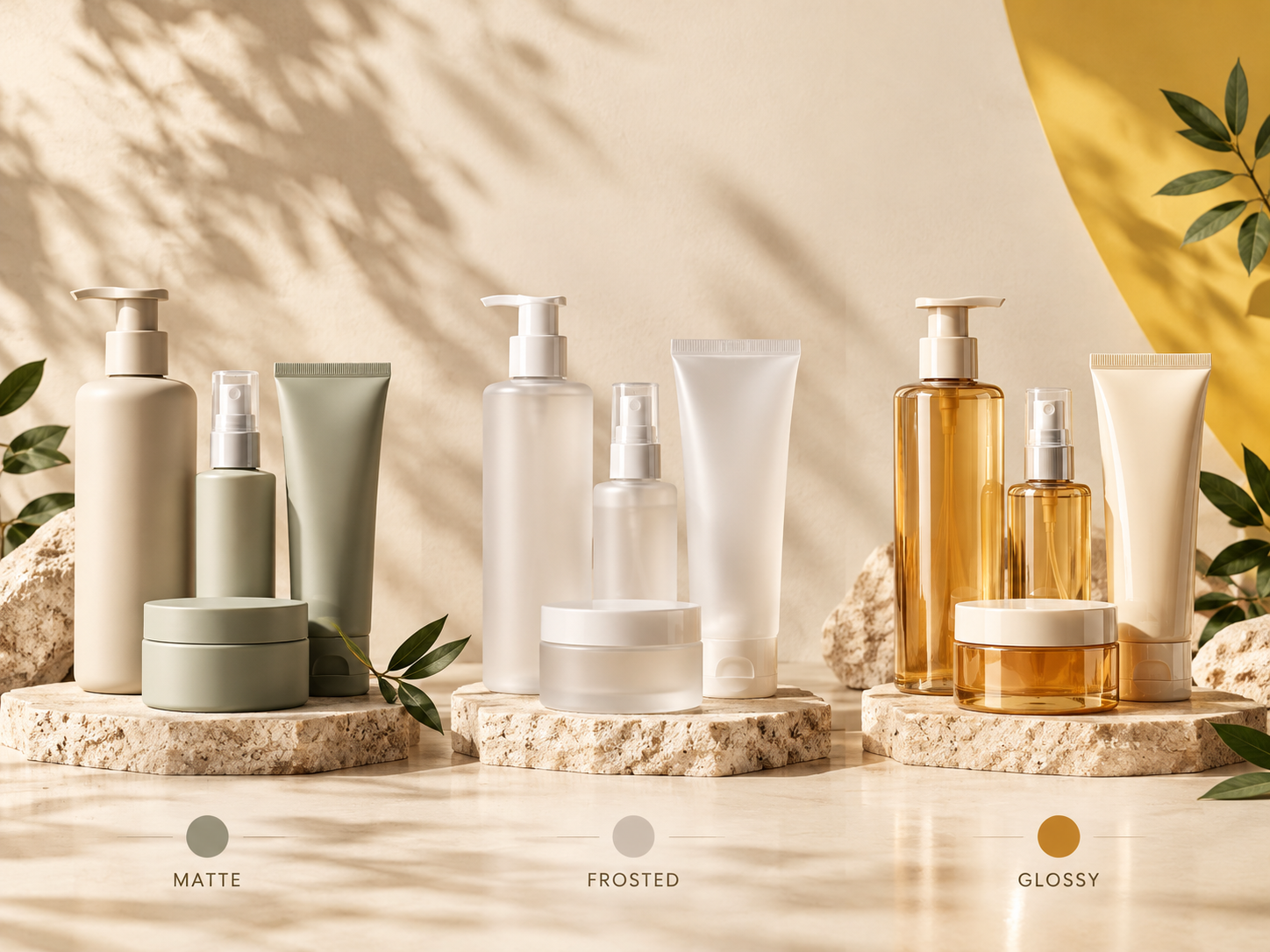
| Feature | Matte | Frosted | Glossy |
|---|---|---|---|
| Visual effect | Soft, low-reflection | Hazy, translucent | Bright, reflective |
| Transparency | Depends on the base material | Usually partially translucent | Depends on the base material |
| Color presentation | Subtle and restrained | Soft and diffused | Often vivid and polished |
| Branding direction | Minimalist, modern | Elegant, skincare-focused | Bold, clean, vibrant |
| Main consideration | Surface durability and feel | Frosting method and consistency | Reflections, fingerprints, and scratches |
These descriptions refer to general visual effects. The actual result can vary according to the plastic material, color, bottle shape, coating, and decoration method.
Instead of choosing a finish simply because it looks attractive in a reference image, evaluate the complete packaging design.
Start with the experience you want customers to associate with your brand.
A minimalist skincare line may favor matte packaging, while a brand that wants a soft, translucent appearance may explore frosted containers. A vibrant personal care range may prefer glossy packaging.
These are design directions rather than strict rules. All three finishes can be adapted to different brand identities.
PET, HDPE, PP, and other packaging materials have different surface characteristics.
A finish that works well on one material may require a different process on another. Transparency, surface texture, coating adhesion, and color appearance should all be considered during development.
Ask your packaging supplier which finishes are practical for your selected bottle or jar and whether an existing product can achieve the desired result.
The surface finish and logo treatment should be developed together.
Potential decoration options include:
Silk screen printing
Hot stamping
UV printing
Labels
Custom color matching
Not every combination is suitable for every material or surface treatment. Before production, confirm the printing method, color contrast, logo position, and adhesion using a finished sample.
If your product range includes a bottle, pump, cap, and jar, consider how all components will look together.
Even when components use the same color reference, differences in material and surface treatment can affect the final appearance.
For a consistent product line, review the bottle body, cap, pump, collar, and decoration as one packaging system rather than making decisions separately.
It can. The cost and lead time depend on the packaging structure, base material, selected process, order quantity, number of colors, and decoration requirements.
An existing stock bottle with a suitable finish may require less development than a new mold or a more complex custom treatment.
Before requesting a quotation, prepare the following details:
Packaging type and reference image
Bottle or jar material
Required capacity
Desired finish: matte, frosted, glossy, or another effect
Color reference or physical sample
Logo artwork and decoration method
Estimated order quantity
Required components, such as pumps and caps
Providing these details helps your supplier evaluate feasibility and prepare a more accurate quotation.
A digital render is useful for exploring ideas, but it cannot fully reproduce the final surface texture, gloss level, color, or tactile experience.
Before placing a bulk order, review a sample that represents the intended material and finishing process.
Check the following:
Color consistency under normal lighting
Matte, frosted, or glossy appearance
Surface uniformity and visible defects
Logo clarity and adhesion
Compatibility between the bottle, pump, and cap
Performance of the packaging with the intended cosmetic formula, where applicable
For coated or specially decorated packaging, confirm any relevant durability tests with your supplier.
Once the final sample is approved, use it as the agreed reference for production quality.
Choosing the right surface finish is one step in developing packaging that matches your product, target audience, and brand identity.
At YELLO Packaging, we supply cosmetic packaging options for skincare, haircare, cosmetics, and personal care applications, including bottles, jars, spray bottles, lotion bottles, and cosmetic tubes.
Explore our lotion bottle collection, spray bottle collection, cosmetic jars, and cosmetic tubes to explore packaging formats for your next project.
If you already have a design reference, share your preferred material, finish, color, logo requirements, and estimated quantity with our team.
Looking for custom matte, frosted, or glossy cosmetic packaging? Contact YELLO Packaging to discuss your packaging requirements and request a quotation.
No. Matte describes a low-reflection appearance, while frosted typically describes a hazy, translucent effect. The final appearance and manufacturing method depend on the material and finishing process.
Selected plastic bottles can achieve a frosted appearance, depending on the material, container design, and available surface treatment. Confirm feasibility and request a sample before finalizing the specification.
There is no single best finish for every brand. Matte, frosted, and glossy finishes create different visual effects. The best choice depends on brand positioning, material compatibility, decoration requirements, and the final packaging design.
Potentially, yes, provided the selected printing or decoration method is compatible with the bottle material and surface treatment. Confirm the result with a finished sample before mass production.
Yes. A physical sample allows you to evaluate the actual color, finish, logo, component fit, and other project-specific requirements before committing to mass production.


