 Choosing the right plastic cosmetic bottle is more than selecting a shape and color. For skincare, haircare, and personal care brands, the packaging must protect the formula, provide a good user experience, support the brand image, and remain practical for manufacturing and transportation.
With so many options available—including PET, HDPE, PP, and PETG bottles—it can be difficult to know which packaging solution is right for your product.
This guide explains the key factors to consider when choosing plastic cosmetic bottles for your beauty brand.
The first question should not be:
“Which bottle looks best?”
Instead, ask:
“Which packaging material is compatible with my formula?”
Different cosmetic formulations may contain oils, alcohol, acids, surfactants, essential oils, or other active ingredients. These ingredients can interact differently with packaging materials.
For this reason, cosmetic brands should conduct compatibility testing before moving to mass production.
A professional packaging supplier can help you evaluate:
Material compatibility
Leakage resistance
Chemical resistance
Bottle deformation
Color stability
Pump or sprayer performance
Long-term storage performance
Packaging appearance is important, but formula compatibility should always come first.
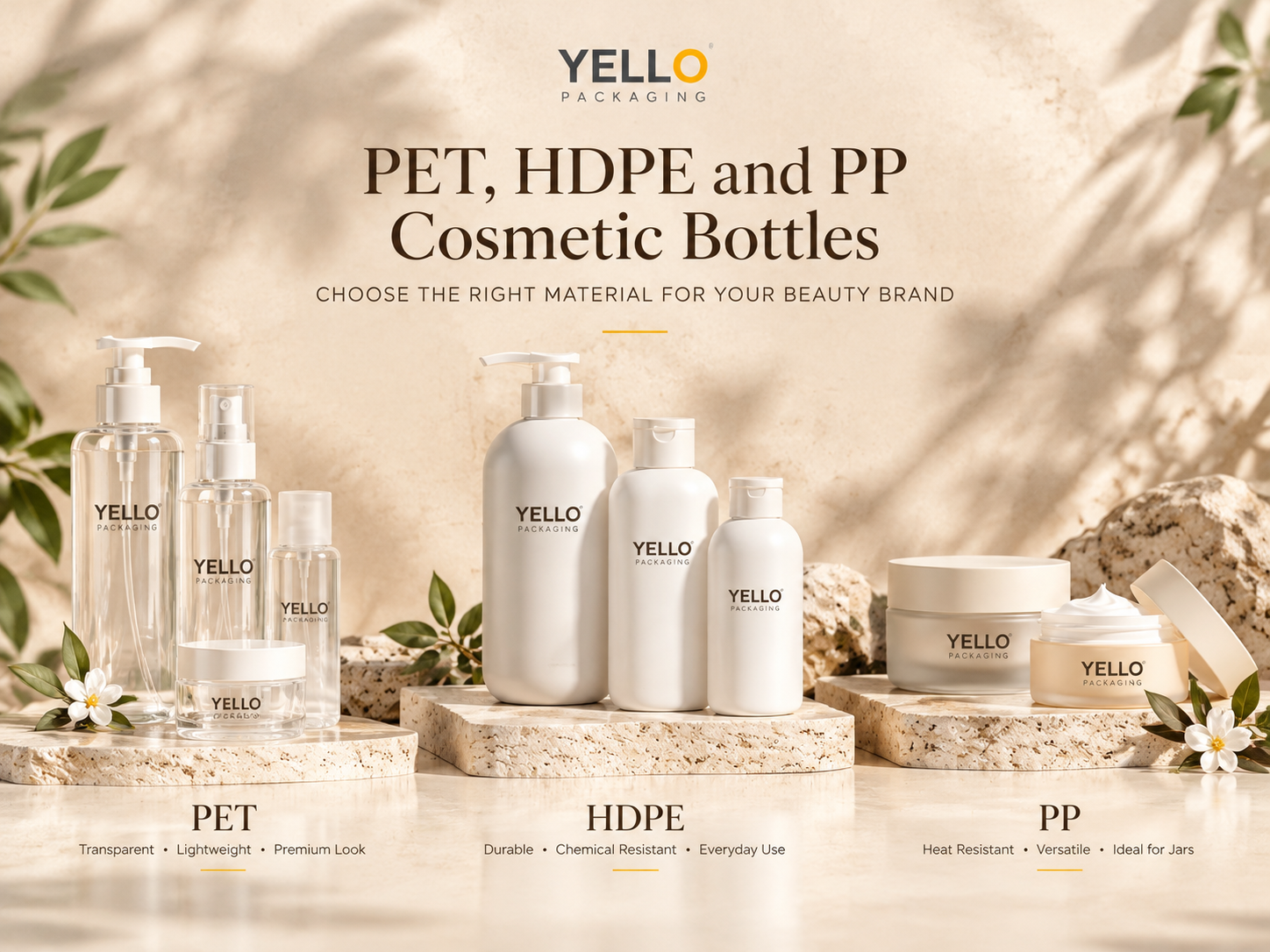
PET (Polyethylene Terephthalate) is one of the most popular materials for plastic cosmetic bottles.
Its excellent transparency makes it particularly suitable for products where consumers need to see the formula inside.
PET bottles are commonly used for:
Facial toner
Serum
Lotion
Cleansing oil
Micellar water
Body care products
Shampoo
Haircare products
One of the biggest advantages of PET is its glass-like appearance while remaining lighter and more impact-resistant than traditional glass packaging.
PET can also be customized with different colors, finishes, and decoration methods.
For example:
Transparent PET
Frosted PET
Colored PET
Matte finish
Glossy finish
Silk screen printing
Hot stamping
UV printing
This makes PET a flexible option for both premium skincare brands and mass-market personal care products.
HDPE (High-Density Polyethylene) is another widely used material for cosmetic packaging.
Compared with PET, HDPE generally provides a more opaque appearance and excellent toughness.
It is commonly selected for:
Shampoo bottles
Conditioner bottles
Body wash bottles
Shower gel
Hand wash
Haircare products
Large-capacity personal care packaging
HDPE is particularly attractive when durability, chemical resistance, and practical everyday use are important.
For brands looking for a soft, modern appearance, HDPE bottles can also be customized with matte or soft-touch finishes.
PP (Polypropylene) is widely used in cosmetic packaging, especially for jars, closures, and products requiring good heat resistance.
PP packaging is suitable for applications such as:
Face cream
Body butter
Hair mask
Scrub
Balm
Thick skincare formulations
PP can also be combined with different closure systems and decorative finishes to create premium-looking cosmetic packaging.
For cream and mask products, wide-mouth PP jars can provide a convenient consumer experience while allowing brands to create distinctive packaging designs.
The viscosity of your formula should influence the dispensing system you choose.
For watery formulas such as toner, essence, and mist products, consider:
Fine mist spray bottles
Treatment pumps
Disc-top closures
Orifice reducers
For lotions, shampoos, and conditioners, common choices include:
Lotion pump bottles
Press pumps
Flip-top bottles
For creams, body butter, scrubs, and masks, consider:
Wide-mouth cosmetic jars
Double-wall jars
Screw-cap jars
Specialty dispensing systems
The right dispensing system can significantly improve both product usability and customer experience.
Capacity should be based on your product positioning and target market.
Common cosmetic packaging sizes include:
30ml
50ml
100ml
120ml
150ml
200ml
250ml
300ml
500ml
For example, 30ml and 50ml bottles are popular for serums and travel-size skincare products, while 200ml to 500ml bottles are commonly used for shampoo, conditioner, body wash, and other personal care products.
The bottle size should also match your brand's retail positioning and expected consumer usage.
Packaging surface treatment can dramatically change how a cosmetic bottle looks and feels.
Two bottles with the same shape can create completely different brand impressions depending on their finish.
Popular options include:
Creates a soft, minimalist, modern appearance.
Provides a premium translucent effect and is particularly popular for skincare packaging.
Creates a bright, clean appearance and can make colors look more vibrant.
Provides a smooth tactile experience and can enhance premium product positioning.
Brands can also combine surface finishing with:
Silk screen printing
Hot stamping
UV printing
Metallic decoration
Custom color matching
Logo printing
This gives brands much more freedom to create packaging that matches their visual identity.
A cosmetic bottle is rarely used alone.
The complete packaging system may include:
Bottle + Pump + Cap + Liner + Decoration + Outer Packaging
For example, a premium skincare bottle may combine a clear PET bottle with a custom-colored lotion pump, metallic decoration, and a matte surface treatment.
When developing a new product, it is important to evaluate the entire packaging system rather than selecting the bottle body independently.
This can help improve:
Product appearance
Functionality
Sealing performance
Brand consistency
Production efficiency
For established beauty brands, using a standard bottle with a simple logo may not always be enough.
Custom cosmetic packaging allows brands to create a more distinctive product identity.
Depending on the project, customization may include:
Custom bottle shape
Custom color
Custom capacity
Custom cap
Custom pump
Matte finish
Frosted finish
Silk screen printing
Hot stamping
UV printing
Custom logo
New mold development
For brands launching a complete skincare line, developing a coordinated bottle and jar collection can also create a much stronger visual identity.
Before placing a large order, we recommend requesting samples and testing the packaging with your actual formula.
Important tests may include:
Formula compatibility testing
Leakage testing
Drop testing
Pump performance testing
Torque testing
Decoration adhesion testing
Storage testing
Transportation testing
Testing the real formula inside the actual packaging is one of the best ways to reduce potential packaging problems during mass production.
Before contacting a packaging manufacturer, prepare the following information:
1. Product type:
Serum, toner, lotion, shampoo, body wash, cream, scrub, etc.
2. Formula viscosity:
Liquid, lotion, cream, gel, or thick formula.
3. Required capacity:
30ml, 50ml, 100ml, 200ml, 250ml, 500ml, etc.
4. Preferred material:
PET, HDPE, PP, PETG, or open to recommendations.
5. Dispensing system:
Pump, spray, dropper, flip-top, screw cap, etc.
6. Appearance:
Transparent, translucent, opaque, matte, glossy, frosted, or custom color.
7. Decoration:
Logo printing, silk screen, hot stamping, UV printing, or other finishing.
8. Order quantity:
Sample, small batch, or mass production.
Providing these details allows your packaging supplier to recommend a more suitable solution and provide a more accurate quotation.
The best plastic cosmetic bottle is not necessarily the most expensive or the most visually attractive option.
It is the packaging that provides the right balance of:
Formula Compatibility + Functionality + Appearance + Customization + Manufacturing Efficiency
PET is often an excellent choice when transparency and premium shelf appeal are important. HDPE is well suited to durable personal care packaging, while PP is widely used for jars and applications requiring good heat resistance.
Most importantly, always test your packaging with the actual formula before mass production.
At YELLO Packaging, we provide customized plastic cosmetic packaging solutions for skincare, haircare, cosmetics, and personal care brands, including cosmetic bottles, jars, tubes, spray bottles, pump bottles, and other packaging solutions.
From bottle selection and color customization to surface finishing, logo decoration, mold development, and OEM/ODM production, our team can help turn your packaging concept into a finished product.
Looking for the right plastic cosmetic bottle for your product? Contact YELLO Packaging to discuss your project and request packaging samples.


